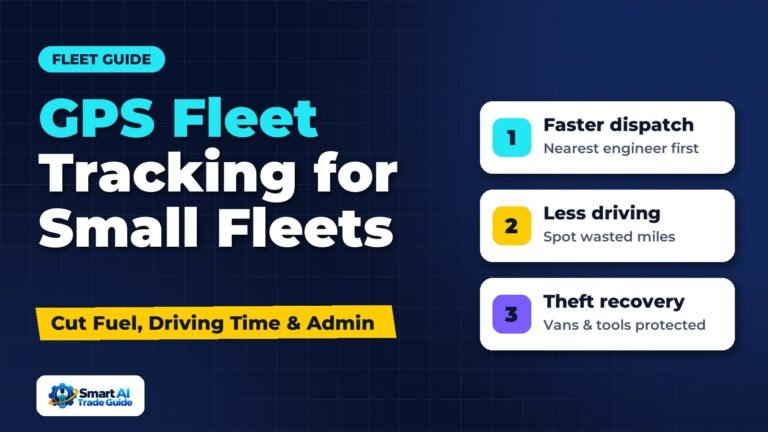
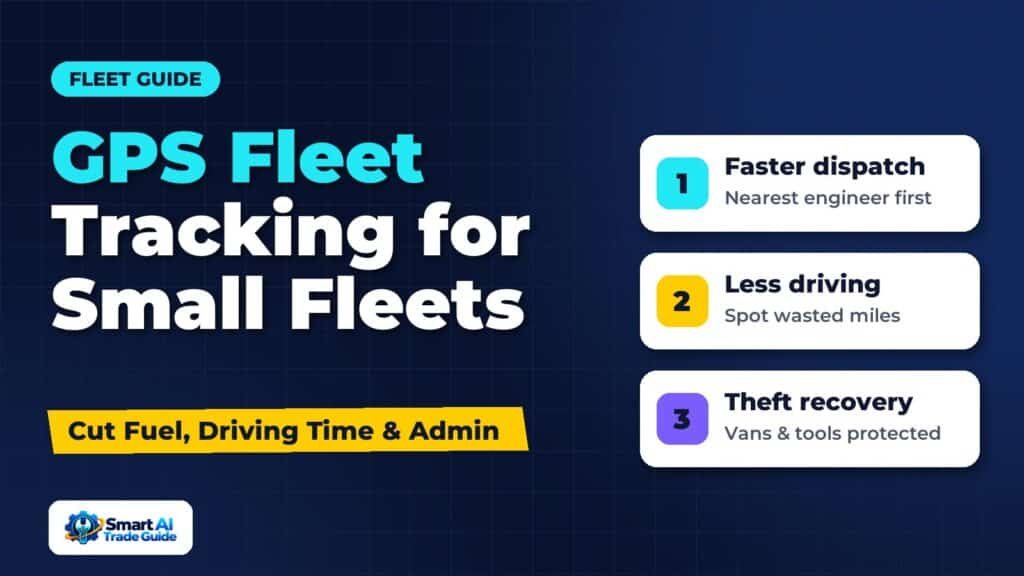
For most trades businesses, vans are the second biggest cost after people. Fuel, insurance, maintenance and the hours spent driving between jobs all add up. GPS fleet tracking gives you visibility of where vehicles are, how they are driven and how much time is lost on the road, so you can do something about it.
This guide explains GPS fleet tracking for small business owners in the trades, what it typically costs per vehicle, which features matter for trades, and how to introduce it to your team fairly.
Pricing checked November 2026. Many providers only quote on request, so figures are indicative.
What GPS Fleet Tracking Actually Does
A small tracking device is fitted to each vehicle, usually wired in or plugged into the vehicle’s diagnostic port. It reports location, speed, journeys and engine data to an online dashboard and app. Depending on the system, you can see:
- Live location of every van on a map.
- Journey history, including start and finish times and stops.
- Driving behaviour, such as speeding, harsh braking and idling.
- Mileage reports for business and private journeys.
- Alerts, for example when a van leaves a site out of hours.
- Maintenance reminders based on mileage or engine hours.
Why It Matters for Service Businesses
Faster, Smarter Dispatch
When an urgent job comes in, knowing which engineer is closest means a quicker response and less driving. Accurate locations also make customer updates more reliable, which pairs well with automated appointment reminders and on-my-way texts. Some field service platforms can show technician locations, but dedicated trackers are usually more accurate and do not rely on staff phones.
Less Time on the Road
Driving time is unpaid time for most trades. Reviewing journey data often shows avoidable patterns: zig-zag routes, long supplier runs and late starts. Cutting even 30 minutes of driving per technician per day frees up significant capacity. Our guide to improving technician utilization explains how to turn that time into billable work.
Lower Fuel and Maintenance Costs
Idling, speeding and harsh driving all increase fuel use and wear. Driver behaviour reports, used constructively, can reduce both.
Accurate Mileage and Timesheets
Automatic mileage logs make expense claims, tax records and timesheets easier and more accurate.
Theft Recovery and Security
Vans full of tools are a target. Tracking can help locate stolen vehicles quickly, and out-of-hours movement alerts give an early warning. Some insurers may take tracking into account, so it is worth asking yours.
Proof of Attendance
If a customer disputes when an engineer arrived or how long they stayed, journey records can help resolve it quickly.
What Does Van Tracking Cost?
Most providers charge a monthly fee per vehicle, sometimes with hardware and installation included and sometimes charged separately. Contract length often affects the price, with longer contracts cheaper per month.
| Provider type | Indicative cost |
|---|---|
| Budget and small-fleet focused trackers | Around £7 to £15 per vehicle per month |
| Mid-range systems with driver behaviour and integrations | Around £15 to £30 per vehicle per month |
| Advanced platforms with dashcams and video | More, often quote-based |
As one example, UK provider Quartix lists plans starting from around £10 to £12 per vehicle per month for its core tracking packages at the time of writing. Larger platforms such as Verizon Connect, Samsara and Teletrac Navman generally quote on request.
Always check:
- Is hardware included, or bought separately?
- Is installation included?
- How long is the contract?
- Are there extra charges for features such as driver ID tags, dashcams or integrations?
Features That Matter Most for Trades
Not every feature is useful for a small service business. Prioritise:
- Reliable live tracking and journey history.
- Simple mobile app so the owner can check without a desk.
- Driver behaviour reports that are easy to read.
- Private mode or privacy settings for vans used outside work, where allowed.
- Mileage reports suitable for your accountant.
- Integration with your job management or dispatch software, if available.
- Flexible contracts for small fleets.
Features like advanced fuel card integration, temperature sensors or complex analytics are usually only worth paying for in larger fleets.
Introducing Tracking to Your Team Fairly
How you introduce tracking matters as much as which system you buy. If staff see it as spying, it can damage trust. If they see it as a tool that protects them and the business, it usually works well.
Good practice includes:
- Tell staff before installing, explain why and what data is collected.
- Put it in writing in a clear vehicle or monitoring policy.
- Use the data for agreed purposes, such as dispatch, safety, theft recovery and mileage.
- Respect privacy outside work. If vans are used privately, consider privacy modes or clear rules.
- Focus on improvement, not punishment. Share patterns and coach, rather than using every report as a disciplinary tool.
In the UK, vehicle tracking that records information about identifiable workers is covered by data protection law. The Information Commissioner’s Office (ICO) publishes guidance on monitoring workers that is worth reading before you start. If you are unsure, take advice.
How to Choose a Provider
- List your goals. Faster dispatch? Lower fuel? Theft protection? Mileage records?
- Shortlist two or three providers that suit your fleet size.
- Ask for a trial or demo using one or two of your vans.
- Compare total cost over the contract, including hardware and installation.
- Check support and installation coverage in your area.
Then set a simple goal for the first three months, such as reducing average daily driving time per technician by 20 minutes, and review the data monthly.
Is It Worth It for a Small Fleet?
For a business with two to ten vans, tracking often pays for itself through a combination of fuel savings, reduced driving time and better dispatch. Consider a simple example: if tracking costs £15 per van per month and helps each technician fit in one extra small job per fortnight, the extra revenue usually covers the cost many times over. The value also comes from security and fewer disputes. Our guide to revenue per technician helps you estimate what an extra job per week is worth.
Frequently Asked Questions
Can I just use my technicians’ phones for tracking?
Some field service apps can show staff locations through their phones, which can be enough for basic dispatch. Dedicated vehicle trackers are usually more accurate, work even if the phone is off and provide vehicle data such as mileage and driving behaviour.
Is it legal to track my employees’ vans?
Generally, businesses can track company vehicles for legitimate purposes, but employees must be told, and data protection rules apply. In the UK, read the ICO’s guidance on monitoring workers and set a clear policy.
Do I need a long contract?
Not always. Some providers offer rolling monthly contracts, while others offer lower monthly prices for longer terms. Compare total cost and flexibility.
Will tracking reduce my insurance?
Some insurers may consider vehicle tracking when pricing fleet or van insurance. Ask your broker or insurer directly.
Conclusion
GPS fleet tracking gives small service businesses a clearer view of one of their biggest costs. Used well, it speeds up dispatch, reduces wasted driving, lowers fuel and maintenance costs, helps recover stolen vans and settles disputes quickly. Choose a simple system that fits your fleet size, introduce it openly with a clear policy, and use the data to coach and improve rather than to police.